Climate - Temperate Rain Forest
Buying a piece of land in rural Ireland was exciting—and, for an inexperienced soul, deeply daunting. Wanting to use and manage the land in sustainable, productive, regenerative ways only added complexity. Around us, large-scale farming and forestry dominate, driven by needs completely different from ours. There was no obvious starting point. Designing productive areas, deciding where things should go, what to grow and where, whether to add a pond, drain a field, or leave areas alone—all of it felt open-ended and consequential.
We went looking for structure. Coming from design practice, we looked for a system that could guide decisions rather than dictate outcomes. That search led us to Yeomans’ Scale of Permanence. Used in permaculture for farm and homestead design—and predating the movement itself—it orders land-management elements from hardest to easiest to change, and by the time required to change them. You can learn more about it here. At the top sits climate. Climate is the least malleable factor, so learning it and working with it becomes the most effective strategy. It largely determines what will grow easily, alongside temperature ranges, humidity, and rainfall.
Fiáin Cottage, near Sneem in southwest Kerry, sits within a Cfb temperate oceanic climate, distinct from much of Ireland. This area is milder, wetter, and more thermally stable than the east, midlands, or north. Frost is rare, summers are cool rather than hot, and rainfall is spread evenly through the year rather than arriving in sharp seasons. Compared with the drier, brighter east or the colder, more variable midlands and northwest, the southwest has the longest effective growing season in the country. The real constraints are wind, high humidity, and excess water—not temperature extremes—making shelter, drainage, and species choice far more critical than frost protection or drought resilience. This part sets us apart from the most common narrative we find online when it comes to vegetable growing, tree planting and orchard planning. This is the first thing we will take into consideration. Next we will look at landforms.
What none of this quite prepares you for is the beauty and distinctive biodiversity this climate supports. These are near-perfect conditions for a temperate rainforest. The signs are everywhere: old hedgerow trees carrying epiphytes along their trunks, ferns and mosses thriving in abundance, and land that can shift from brown to deep green within a single season. There is a quiet richness here that feels resilient and generous at the same time, and once you notice it, it reshapes how you see—and treat—the land.
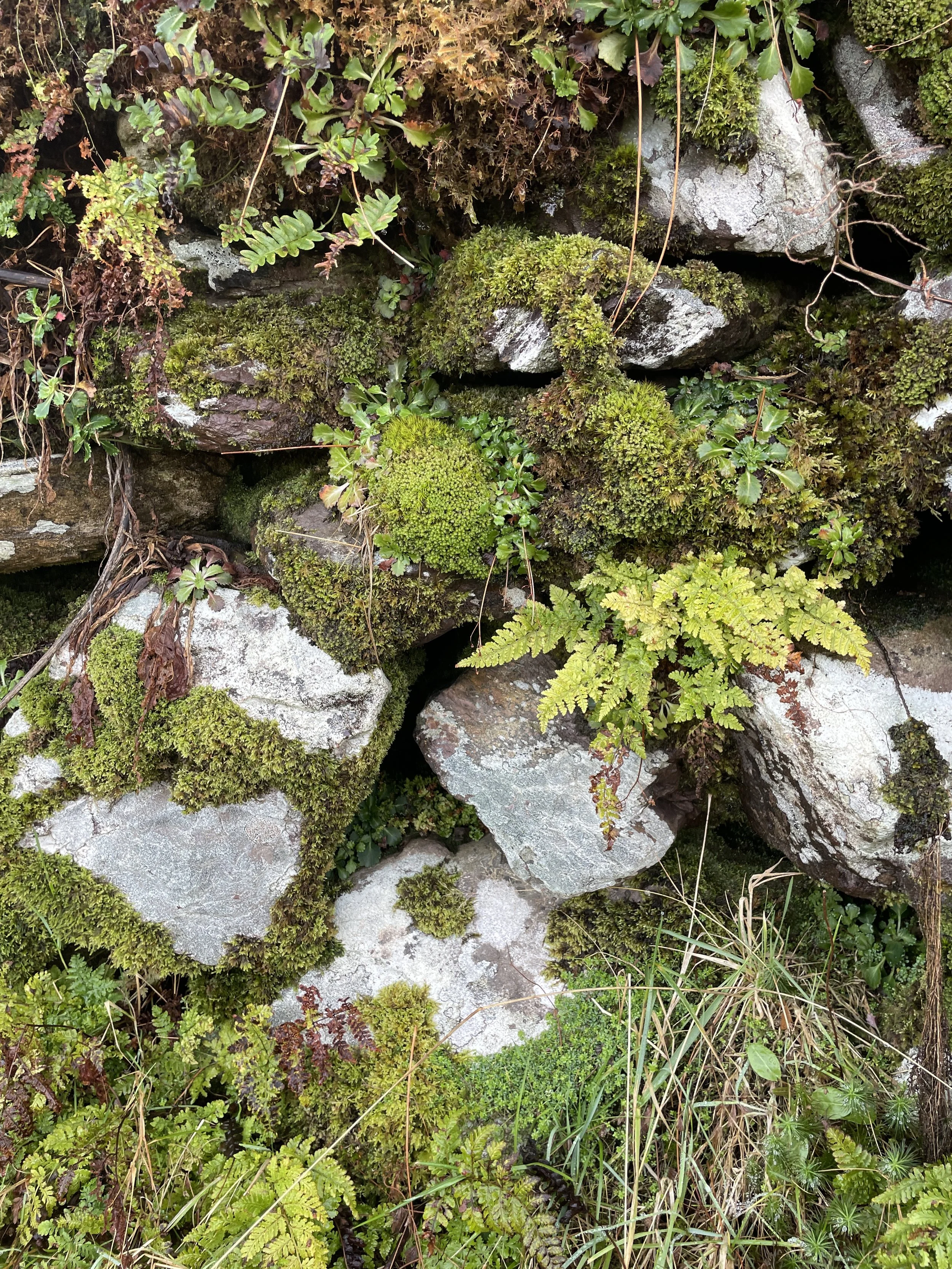
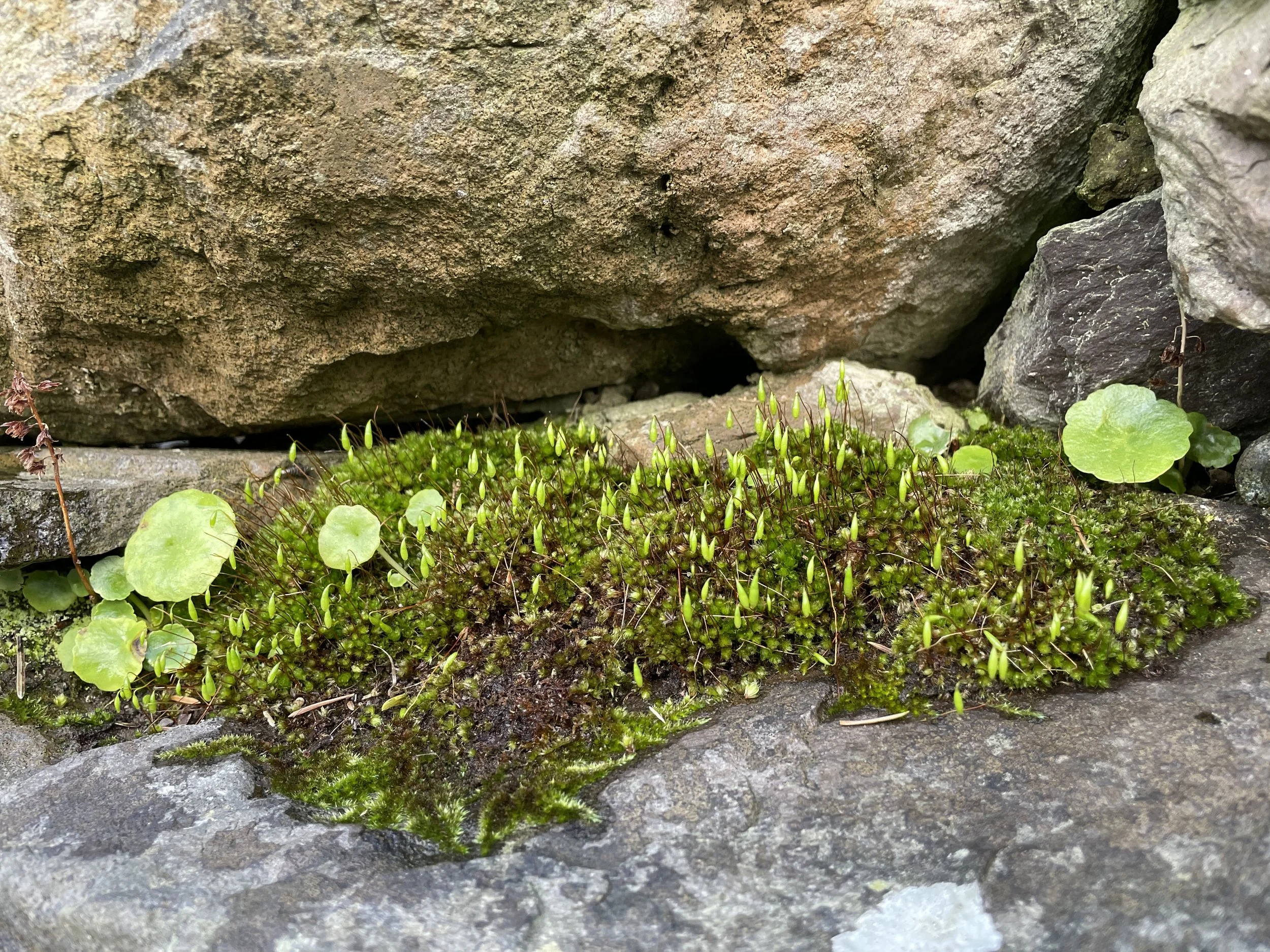
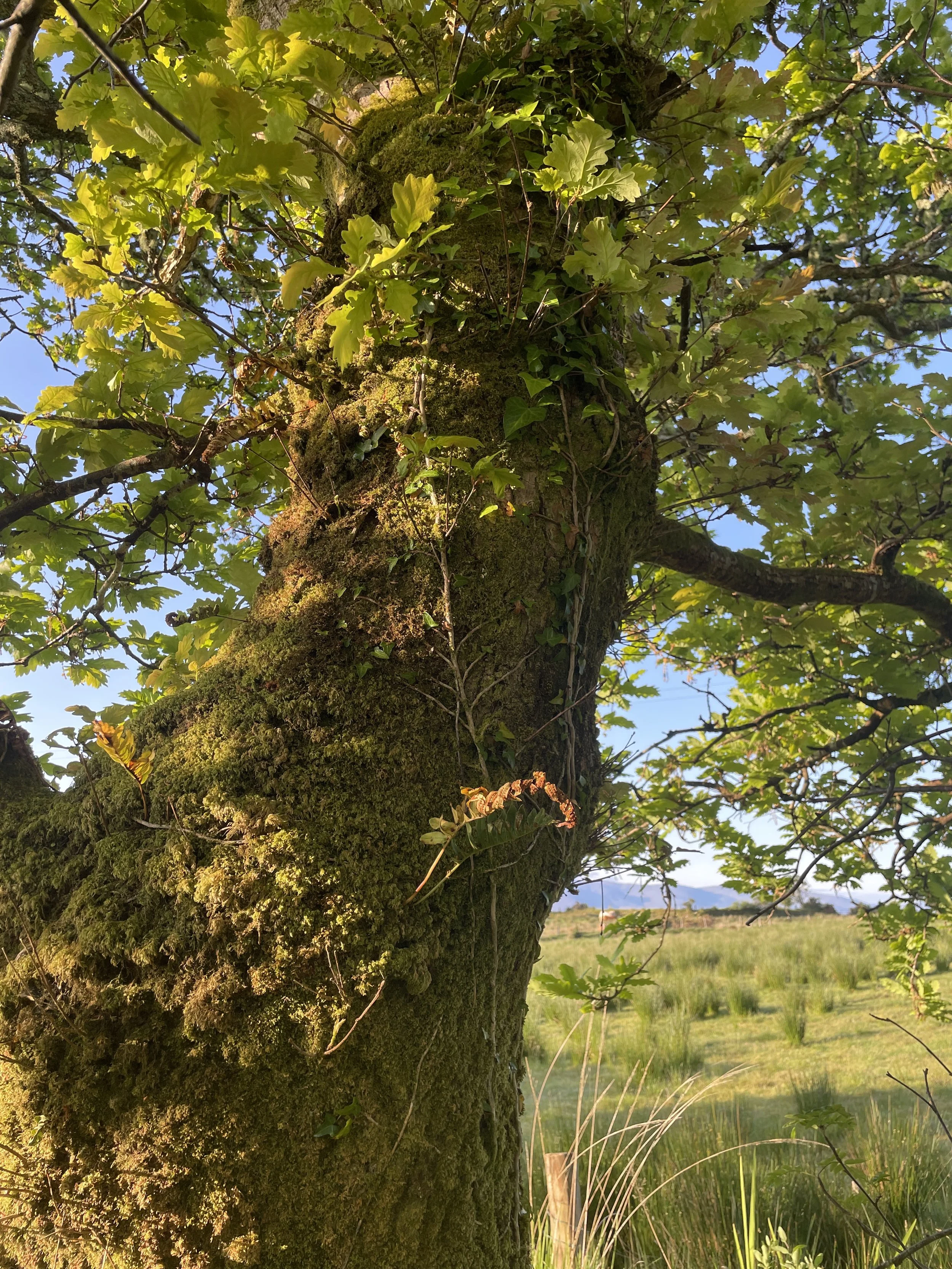
Above: observation from around the land. Left: a stone wall covered in mosses and ferns. Middle: a shed wall left exposed with mosses and navelwort. Right: Oak tree with ferns and moss growing on its trunk, known as epyphets.
Below: a wonderful documentary video on the ecology and history of this climate